Cursor vs OpenAI Codex 2026: Which AI Coding Agent Wins?
Cursor vs OpenAI Codex in 2026: full comparison for custom development, and which AI coding tool wins for solo developers, teams, and enterprise.
Cursor vs OpenAI Codex 2026: Interactive IDE Versus Autonomous Cloud Agent
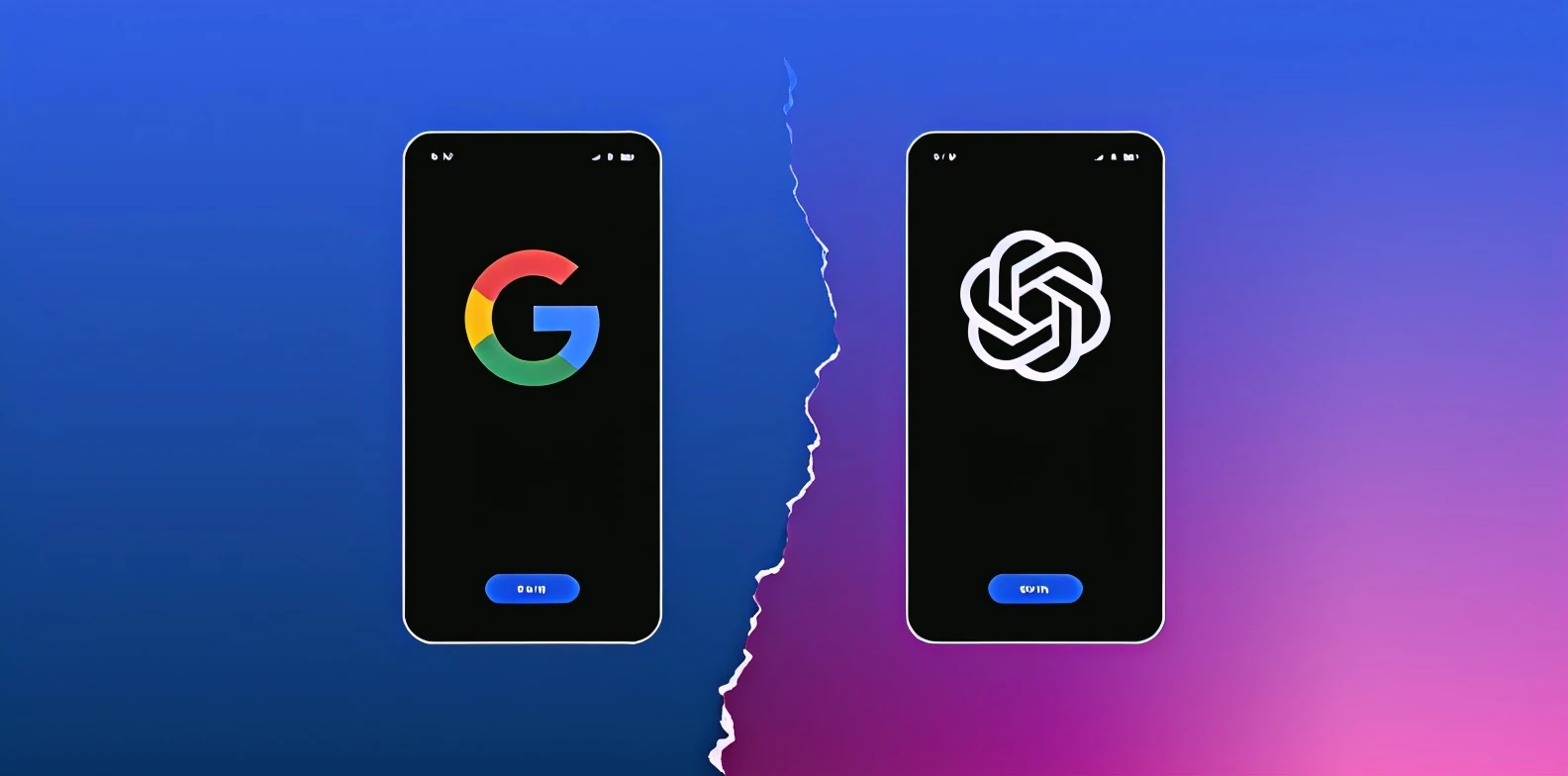
In 2026, the AI coding tool market has split along a fundamental architectural line. Cursor 🇺🇸 (Anysphere, San Francisco) is an AI-native IDE where you sit beside the AI in real time. OpenAI Codex 🇺🇸 (San Francisco) is an autonomous cloud agent that runs delegated tasks in sandboxed VMs while you do something else.
Both start at $20/month. Both are excellent. They are fundamentally different products.
This guide gives you the data, the trade-offs, and a clear pick for solo developers, teams, and enterprise engineering UI UX consulting organizations using either or both.
KEY NUMBERS — JUNE 2026
Cursor: 2 million+ users · ~$2 billion annual recurring revenue · Tab autocomplete at 72% acceptance rate · multi-model routing across Claude, GPT, Gemini, and Composer 2 · daily Agent users typically spend $60-$100/month.
NxCode · Spectrum AI Lab, April 2026
OpenAI Codex: Relaunched January 2026 as a cloud-native agent · macOS app released February 2 2026 · bundled into 200M+ ChatGPT subscribers across Plus, Pro, Business, Enterprise · powered by GPT-5.3-Codex.
NxCode · OpenAI, January–April 2026
Token efficiency claim: OpenAI reports Codex CLI is approximately 4x more token-efficient than competing agents — a $20 API budget on Codex accomplishes roughly the same work as $80 on a less efficient agent. Cursor uses more tokens per task than either.
Fungies.io · OpenAI, March 2026
Pricing shift: OpenAI moved Codex pricing to token-based credits on April 2, 2026 for Plus, Pro, Business, and most Enterprise customers — replacing per-message billing with API token rates. Cursor remains on credit-pool pricing.
OpenAI Help Center · April 2026
Launch Dates, Markets, and Who Built Them
Cursor — Built by Anysphere, San Francisco

Founded by Anysphere in late 2022. AI-native IDE built on a VS Code fork. Reached 1 million users in 2024 and over 2 million by 2026. Reported $2 billion ARR — the fastest revenue trajectory of any developer tool in history. Launched Composer 2, an in-house coding model, to reduce dependence on third-party APIs. Expanded to JetBrains in 2026.
OpenAI Codex — Built by OpenAI, San Francisco
The Codex brand has a long history. The original OpenAI Codex powered the first GitHub Copilot in 2021. After deprecation in 2023, OpenAI relaunched Codex on January 22, 2026 as a fully reimagined cloud agent built into ChatGPT. The macOS app shipped February 2 2026. Powered by GPT-5.3-Codex models, optimized specifically for software engineering. Available as CLI, IDE extension, ChatGPT integration, and web interface.
Design Philosophy: Where the Two Tools Diverge
Cursor = interactive IDE for real-time pair programming
You open your project in a VS Code-based editor and the AI works alongside you. Tab completion at 72% acceptance rate. Composer 2 for visual multi-file edits. Agent mode executes multi-step tasks while you watch, guide, and approve in real time. The bet: most developers want AI integrated into their editor, not a separate execution environment.
OpenAI Codex = autonomous cloud agent for delegated work
You assign a task to Codex. It spins up a sandboxed cloud VM, clones your repository, runs your build and tests, and produces a pull request — all while you work on something else. Best for parallelizable, well-defined tasks that do not require real-time guidance. The bet: the future of engineering is delegation, not collaboration. You orchestrate; Codex executes.
Codex is an autonomous cloud agent that works in the background. Cursor is an interactive AI IDE that works alongside you. They solve different problems differently.
— NxCode 2026 Comparison, AI Coding Tools Analysis
Strengths and Weaknesses: An Honest Developer Comparison
Cursor Strengths
Tab autocomplete: 72% acceptance rate. Fastest Tab completions in the category.
Visual multi-file editing: Composer 2 provides visual diff across files. Codex submits PRs without interactive diff.
Model flexibility: Routes between Claude, GPT, Gemini, and Composer 2. Hedges against single-model risk.
Familiar interface: VS Code fork. Lower learning curve for the 70M+ VS Code users worldwide.
Real-time control: You see every change as it happens. Approve, reject, or redirect mid-task.
Free tier: Hobby plan available for evaluation.
Cursor Weaknesses
Higher token cost: Burns more tokens per task than Codex or Claude Code. Frontier models deplete credit pool fast.
Hidden costs: Power users routinely report $60-$200/month total usage above the Pro subscription floor.
Local-only: No native cloud agent. Long-running tasks tied to local session and IDE state.
No async parallelism: Cannot delegate 10 tasks and walk away. Designed for one-at-a-time interactive work.
OpenAI Codex Strengths
Sandboxed cloud VMs: Each task runs in isolated container with full build tools, test suites, dependencies.
Parallel async tasks: Run 5+ Codex tasks simultaneously. Each produces a pull request. Multi-agent workflow built in.
Bundled with ChatGPT: No separate subscription needed. Plus at $20/mo includes Codex CLI, IDE, and Cloud surfaces.
Token efficiency: OpenAI reports 4x better efficiency than competing agents. $20 of Codex ≈ $80 of less efficient tools.
Enterprise compliance: SCIM, EKM, RBAC, audit logs, Compliance API. Built for regulated procurement.
PR automation: Native GitHub pull request generation. Designed from day one for async cloud engineering.
OpenAI Codex Weaknesses
Cloud-only: No local-first execution. Internet connection to OpenAI required for every task.
Limited interactivity: Not designed for real-time pair programming. Cannot watch and redirect mid-task like Cursor.
Pricing complexity: April 2 2026 shift to token-based credits added a layer of cost unpredictability.
Model lock-in: GPT-only. No flexibility if a non-GPT model is better suited for a task.
Mac-first: Native desktop experience launched on macOS in February 2026. Windows/Linux parity lags.
Cursor vs OpenAI Codex: Full Snapshot
TABLE 1 — Tool Snapshot: Architecture, Models, Pricing, Token Efficiency
Sources: NxCode (Apr 2026) · OpenAI Codex documentation (Apr 2026) · Cursor.com/pricing · Fungies.io (Mar 2026) · Spectrum AI Lab · Developers Digest · official Anysphere and OpenAI communications
The Verdict: Which AI Coding Agent Wins for Your Use Case
TABLE 2 — Use Case Winner: Cursor, OpenAI Codex, or Both
Recommendations based on real developer reports, official documentation, and benchmark data as of April 2026
Cursor wins on real-time control. Codex wins on async delegation. The best developers use both.
The Combined Stack: Why Most Professional Developers Use Both
The most important shift in the 2026 AI coding landscape is that experienced developers no longer treat Cursor and Codex as alternatives. They treat them as complementary tools serving different parts of the development workflow.
Cursor handles the 80% of work that requires real-time judgment: writing new features, debugging tricky issues, reviewing architecture changes, learning new codebases. The interactive feedback loop is critical for this work. Codex handles the 20% that is delegatable: bulk refactors, test coverage expansion, migration scripts, dependency updates, automated bug fixes from tickets. You write the task description; Codex runs in a sandboxed cloud VM; you get a pull request to review.
Combined cost for a serious developer: $40-$220 per month. For a software engineer earning $150,000+ annually, the math is straightforward. A single afternoon of parallelized Codex tasks while you focus on real-time work with Cursor can recoup the monthly cost. The 2026 question is no longer which AI coding tool to use. It is how to orchestrate both into a productive workflow.
Future Trajectory: Where Each Tool Is Heading
Cursor — IDE leadership + Composer model maturity
Composer 2 reduces dependence on third-party model APIs and gives Cursor a margin advantage on credit economics. JetBrains expansion in 2026 brings Cursor into Java/Kotlin enterprise development. Background Agents and Bugbot push toward agent parity with Codex. $2B ARR and 2M+ users make Cursor the most valuable independent dev tool company in history. Future direction: become the default AI-native IDE for the next generation of developers.
OpenAI Codex — agentic engineering substrate
Codex Skills marketplace launched in 2026 — installable custom workflows that extend Codex behaviour. GPT-5.3-Codex-Spark research preview gives Pro subscribers fast low-latency coding for daily tasks. Token-based pricing alignment with API rates simplifies enterprise economics. OpenAI is positioning Codex as the autonomous engineering layer of the future, not just a developer tool. Future direction: become the cloud agent substrate that automates non-interactive engineering work at enterprise scale.
Frequently Asked Questions
Q1: Which is better for solo developers — Cursor or OpenAI Codex?
It depends on your workflow style. For developers who code primarily in real time — writing features, debugging, learning new codebases — Cursor wins. The 72% Tab acceptance rate and Composer 2 visual diffs are unmatched for interactive work. For developers with a steady pipeline of delegatable async tasks (bulk refactors, test coverage, migrations), Codex at $20/month bundled with ChatGPT Plus is hard to beat. If you already pay for ChatGPT Plus or Pro, Codex is effectively free — try it before adding a Cursor subscription.
Q2: Which is better for engineering teams?
Codex wins on team pricing economics. ChatGPT Business at $25/seat bundles Codex with full enterprise features (SCIM, EKM, RBAC, audit logs). Cursor Business at $40/seat is more expensive but includes Composer 2 multi-file editing, shared rules, and usage analytics. For most teams under 50 engineers, the call depends on whether daily real-time IDE work (Cursor) or delegated async tasks (Codex) is the dominant workflow. Many teams adopt both — Cursor for individual developer productivity, Codex for team-wide automation.
Q3: Is OpenAI Codex really 4x more token-efficient than other agents?
That is OpenAI’s claim, verified in published comparisons. Codex reportedly consumes 1.5M tokens for a task that requires 6.2M tokens in Claude Code. Cursor uses more tokens per task than either. The efficiency comes from GPT-5.3-Codex’s specialized training and the sandboxed cloud architecture that reduces redundant context-loading. For developers using API-based billing, this efficiency translates directly to lower bills. For subscription users, it means higher effective usage limits within the same monthly tier.
Q4: Did OpenAI really change Codex pricing in April 2026?
Yes — on April 2, 2026, OpenAI moved Codex pricing from per-message billing to token-based credits across Plus, Pro, Business, and most Enterprise plans. Credits remain the purchase unit, but consumption is now calculated as credits per million input, cached input, and output tokens. The change aligns Codex pricing with standard API token metering. Some users see higher costs; others see lower costs, depending on workload mix. The Pro $200/month tier continues to honor the 20x Plus baseline as a loyalty benefit, with elevated 25x Plus Codex limits through May 31, 2026.
Q5: Which does ZeeFrames recommend for custom software development?
For real-time IDE work and interactive development, Cursor remains the recommended primary tool. For projects with delegatable async tasks — bulk refactors, test coverage expansion, migration scripts, automated PR generation — Codex is the better choice. For most professional custom development engagements, ZeeFrames recommends both: Cursor for daily editor work, Codex for the parallel async workload. The combined $40-$220/month per developer is small compared to the engineering velocity gained. If a client is already on ChatGPT Pro, Codex is the natural addition with no incremental subscription cost.
Related Insights




Your next great product decision starts with one conversation.
If your product isn't where you want it to be, 30 minutes with us might tell you why. And more often than not, we're exactly the team to fix it.
Book a Free Discovery Call