Lovable vs Webflow 2026: The Startup Founder's Decision Guide
Lovable vs Webflow in 2026 for startup founders. 10 key differences, library ecosystems, security incidents, and cost analysis ($20 vs $14 per month).

Lovable vs Webflow 2026: The Startup Founder's Decision Guide (10 Key Differences Tested)
Lovable vs Webflow development is not the matchup most founders frame it as. It is not AI versus no code development. It is function first versus design first.
Lovable, founded in 2023 by Anton Osika in Dover, Delaware, has reached 200 million dollars in ARR by 2026 and raised 552.5 million dollars across funding rounds. It is the AI native vibe coding platform that turns prompts into working React applications in minutes.
Webflow, founded in 2013 by Vlad Magdalin, Sergie Magdalin, and Bryant Chou in San Francisco, was last valued at 4 billion dollars. It is the pixel perfect visual website builder used by Dropbox, Discord, Vice, Lattice, and thousands of design forward agencies.
Both are excellent at what they do. The question is what you are building. This guide breaks down the 10 differences that actually matter for startup founders, with verified May 2026 data from G2 ratings, independent benchmarks, and production usage patterns. By the end you will know which platform fits your project.
KEY NUMBERS, LOVABLE VS WEBFLOW IN 2026
Market position: Lovable reached 200 million dollars in ARR by 2026, the fastest ARR growth in vibe coding history. Webflow was last valued at 4 billion dollars (Series C, 2022) and powers thousands of brand sites including Dropbox, Discord, and Vice. Lovable G2 rating: 4.7 out of 5 (246 reviews). Webflow G2 rating: 4.4 out of 5 (975 reviews).
CB Insights, G2 May 2026, NxCode 2026 ARR data
Speed to working product: Lovable produced a working SaaS prototype in 47 minutes (NxCode 2026 benchmark). Webflow typically requires days to weeks for a polished marketing site with custom design, CMS configuration, and animations. The speed gap is real but the comparison is unfair, they solve different problems.
NxCode AI App Builder Benchmark 2026, practitioner reviews
Pricing reality: Lovable starts free, Pro at 20 dollars per month, plus token based usage that can exceed base subscription on complex builds. Webflow starts free, Basic at 14 dollars per month (annual), Business at 39 dollars per month. Webflow pricing is 6 dollars per month cheaper at entry but scales with site complexity and editor seats.
Lovable.dev pricing, Webflow.com pricing May 2026
Funding and trajectory: Lovable raised 552.5 million dollars total Series B by December 2025 (last 330 million round). Three years old. Webflow last raised 120 million dollars in Series C 2022 at 4 billion dollar valuation. Twelve years old. Different stages, different risk profiles for founders.
CB Insights company data, Series funding announcements
Lovable vs Webflow, Who Built Them and What They Are
Lovable, Built by Anton Osika (2023)
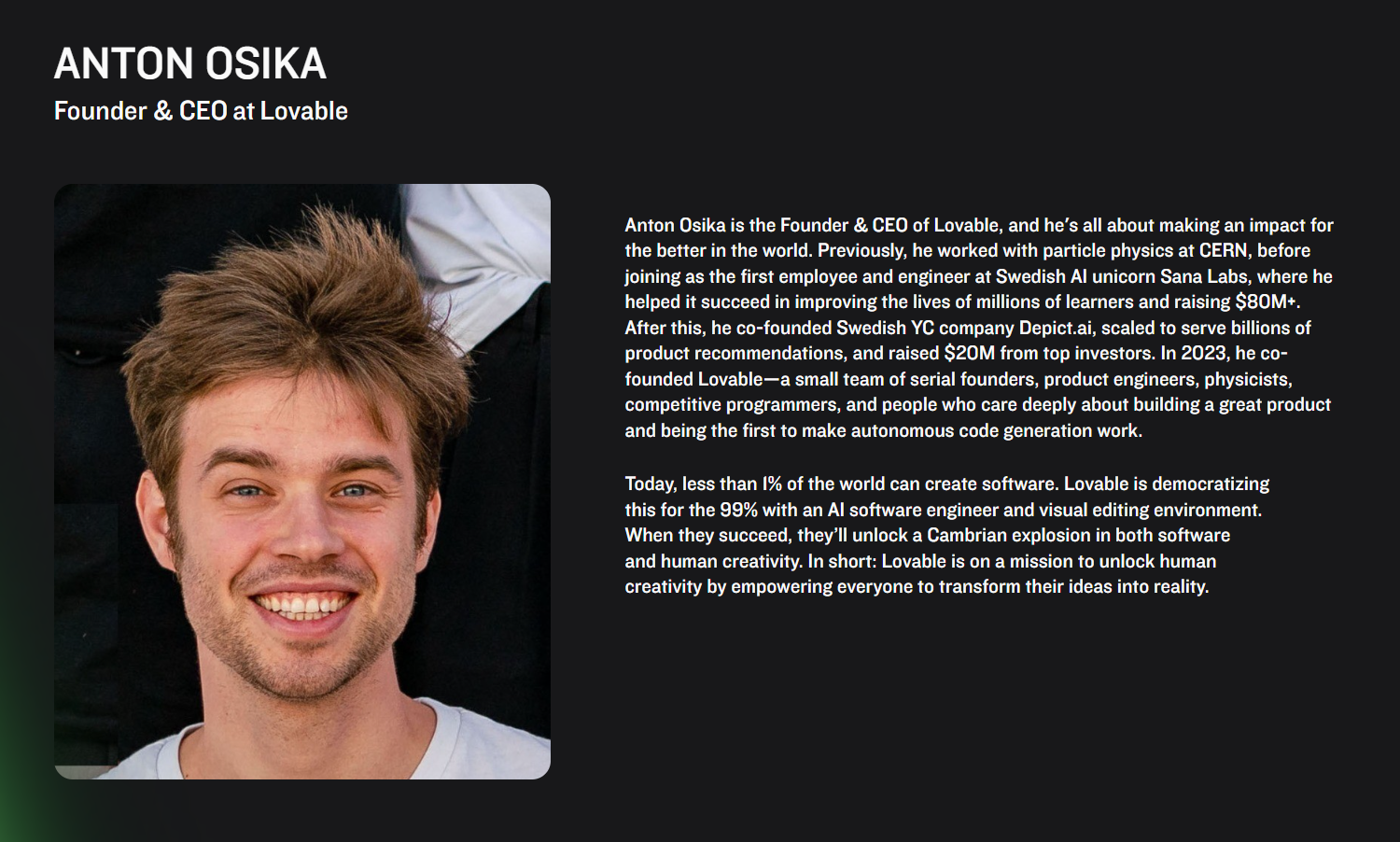
Founded in 2023 by Anton Osika and team in Dover, Delaware. Originally launched as GPT Engineer. AI native vibe coding platform that turns natural language prompts into working React applications. Generates React, TypeScript, Tailwind, and Supabase backend, with GitHub sync for code ownership. Reached 200 million dollars in ARR by 2026, the fastest ARR growth in the vibe coding category. Raised 552.5 million dollars total across funding rounds, including a 330 million dollar Series B in December 2025 led by Insight Partners. Used by Y Combinator and Sequoia Capital portfolio companies, indie SaaS founders, and product managers building MVPs without engineering teams.
Webflow, Built by Vlad Magdalin, Sergie Magdalin, and Bryant Chou (2013)
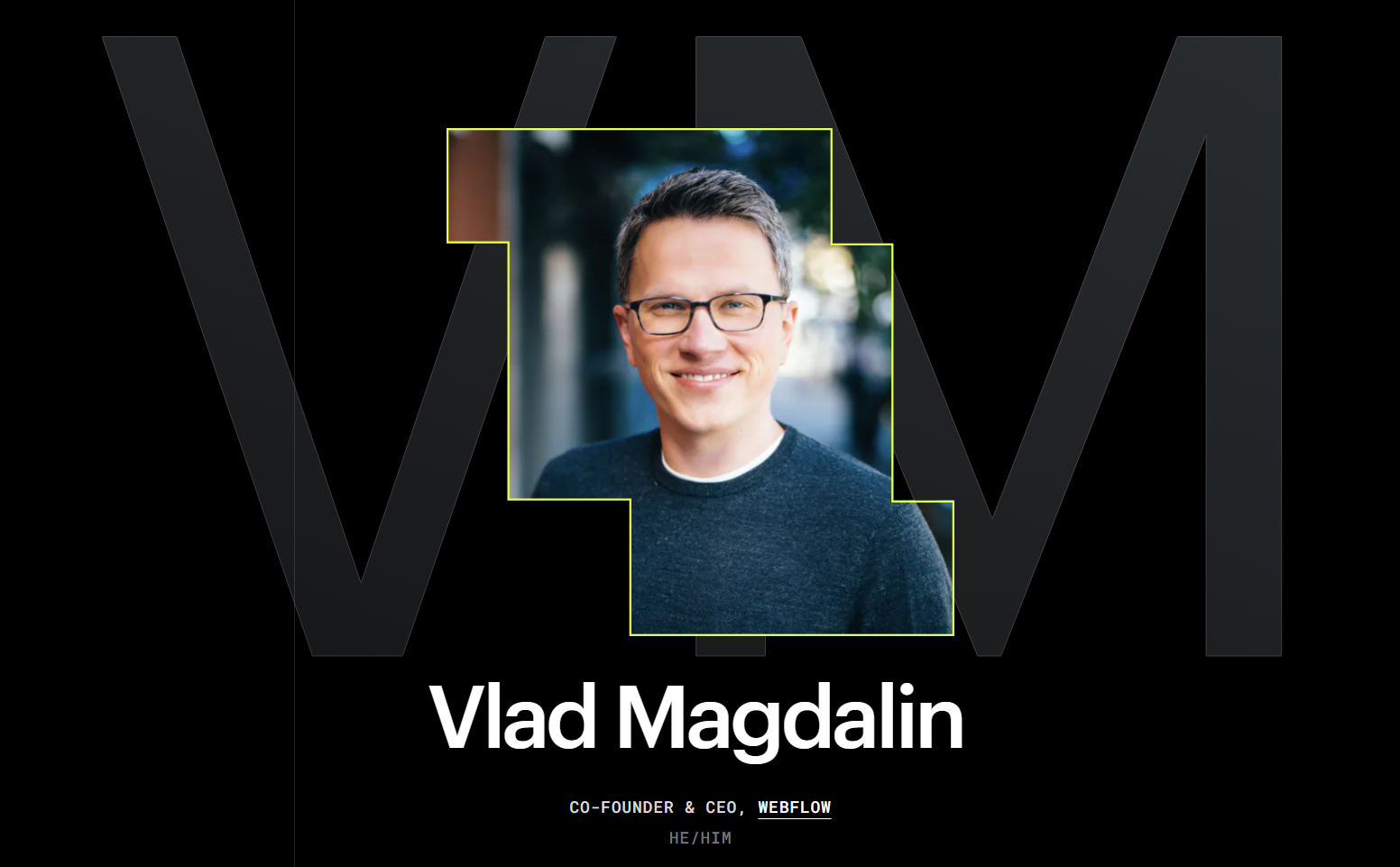
Founded in 2013 by brothers Vlad and Sergie Magdalin plus Bryant Chou in San Francisco. Visual website builder that exports semantic HTML and CSS, designed for designers who want full creative control without writing code. Evolved into a Digital Experience Platform (DXP) with CMS, Ecommerce, Memberstack integrations, and Webflow AI for design assistance. Last valued at 4 billion dollars in Series C 2022. Used by Dropbox, Discord, Vice, IDEO, Lattice, Petal, and thousands of design forward agencies globally. The dominant pixel perfect visual builder for brand sites and content driven projects.
10 Key Differences Between Lovable and Webflow (Tested in 2026)
The following 10 differences determine which platform fits a given startup. Each comparison uses verified 2026 data and a clear winner for that dimension.
#1 Core Purpose and Use Case
- Lovable: AI App Builder. Built to generate full stack applications (frontend, backend, database) from natural language prompts. Best for SaaS MVPs, internal tools, dashboards, CRUD apps.
- Webflow: Visual Website Builder and CMS. Built for marketing sites, landing pages, content driven brand sites, portfolios, and design forward web experiences. Best for sites where presentation drives conversion.
- TIE, depends on use case
#2 Design Quality and Pixel Control
- Lovable: AI generates UI using shadcn/ui defaults. Polished but generic. No pixel level control by design. Founders sacrifice design control for speed.
- Webflow: Pixel perfect visual canvas. Complete control over typography, spacing, layout, animations. Designers can match Figma comps exactly. Industry leading visual control.
- WINNER: WEBFLOW
#3 Speed to First Working Product
- Lovable: Minutes to first working URL. Write a prompt, get a deployed React app with database. 47 minute SaaS prototype benchmark (NxCode 2026). Fastest in category.
- Webflow: Days to weeks for a polished site. Design first workflow requires more upfront work. Faster than custom development but slower than Lovable for app prototypes.
- WINNER: LOVABLE
#4 Full Stack Capability
- Lovable: Native full stack generation. React frontend, Supabase backend, database schema, authentication, all generated from prompts. The standout feature.
- Webflow: Frontend only. Webflow generates marketing sites and CMS driven content. Backend functionality requires integrations (Memberstack, Outseta, Logic).
- WINNER: LOVABLE
#5 CMS and Content Management
- Lovable: Limited. App focused with Supabase as database. Content management is a secondary concern. Would require significant custom development to match Webflow CMS.
- Webflow: Mature CMS. Collections, multi reference fields, dynamic templates, conditional visibility, scheduled publishing, multi editor workflows. Industry leading for content sites.
- WINNER: WEBFLOW
#6 SEO Capability
- Lovable: Basic SEO. Meta tags work, but schema markup, structured data, and content optimization require manual implementation. Improving but lacks depth.
- Webflow: Strong SEO control. Custom meta tags, schema markup, sitemaps, OG tags, alt text fields, 301 redirects, and clean semantic HTML output. Designer friendly SEO tooling.
- WINNER: WEBFLOW
#7 Animation and Interaction Design
- Lovable: Limited custom animations. CSS based animations work but complex interactions require Framer Motion or custom React code.
- Webflow: Industry leading. Timeline animations, scroll triggers, micro interactions, hover states, all configured visually without code. Webflow Interactions is the gold standard.
- WINNER: WEBFLOW
#8 Learning Curve
- Lovable: Minutes. Describe what you want in plain English. AI handles the implementation. Best in class for non technical founders.
- Webflow: Significant. 20 to 40 hours to become productive. Visual interface is intuitive but mastering animations, CMS, and Webflow specific concepts takes time.
- WINNER: LOVABLE
#9 Pricing and Total Cost
- Lovable: Free tier available. Pro at 20 dollars per month with token based usage on top. Complex builds can exceed base subscription. Less predictable cost structure.
- Webflow: Free tier available. Basic at 14 dollars per month (annual), Business at 39 dollars per month. Predictable pricing but per editor seat fees add up for teams.
- WINNER: WEBFLOW
#10 Long Term Viability and Platform Risk
- Lovable: Founded 2023. 552.5 million dollars raised. 200 million dollars ARR. Strong trajectory but only 3 years old. Series B startup risk exists.
- Webflow: Founded 2013. Last valued at 4 billion dollars. 12 years of continuous development. Mature platform with established customer base. Lower platform risk.
- WINNER: WEBFLOW
Lovable wins on speed, AI workflow, and full stack capability. Webflow wins on design control, CMS depth, animations, and platform maturity. The right choice depends on whether you are building an app or a website.
Full Snapshot, Lovable vs Webflow in 2026
TABLE 1, Complete Side by Side Comparison
Sources: CB Insights company data for Lovable and Webflow, G2 ratings May 2026, NxCode 2026 AI App Builder Benchmark, official Lovable.dev and Webflow.com documentation, Webyansh 2026 comparison, Lovable Club April 2026 analysis.
Cost and Total Cost of Ownership
Lovable cost profile
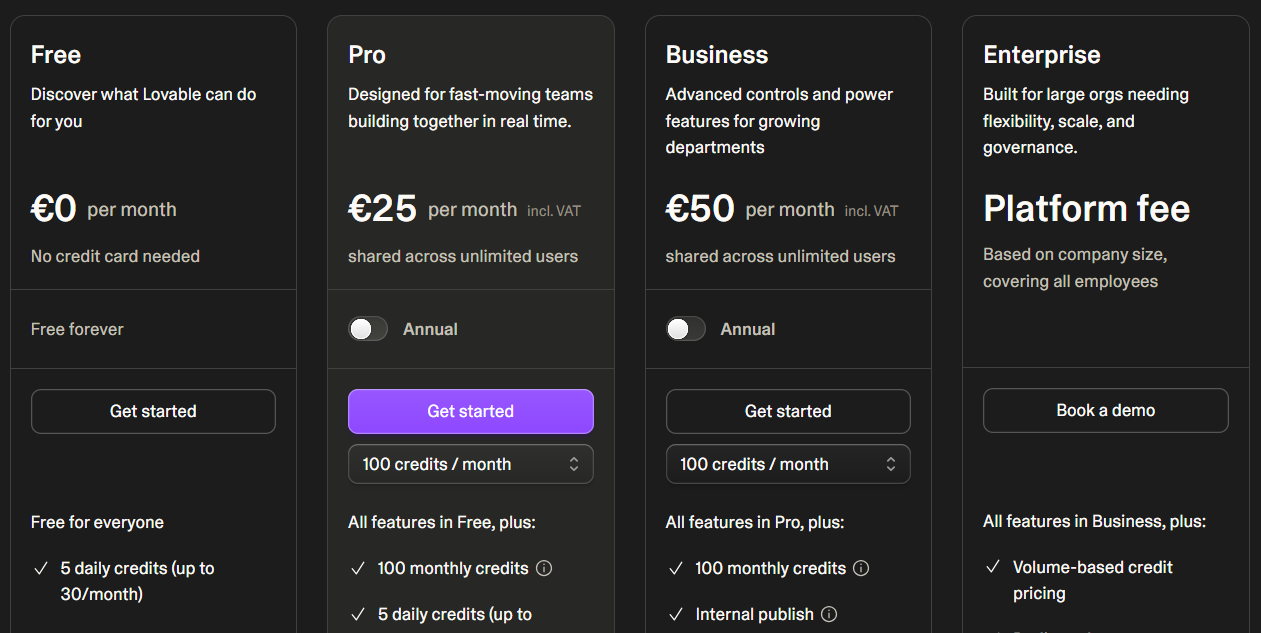
Lovable starts free with a generous token allowance. Pro tier is 20 dollars per month, with additional token costs that depend on the complexity and iteration count of your project. Independent reviewers report token consumption can significantly exceed the base subscription on complex builds, particularly during iteration cycles. There is no separate hosting cost on Lovable, but exporting to self host (via Vercel or Netlify) adds standard hosting fees. For MVPs and prototypes the cost is contained. For long term production sites with frequent updates, the token model can be less predictable than Webflow's flat pricing.
Webflow cost profile
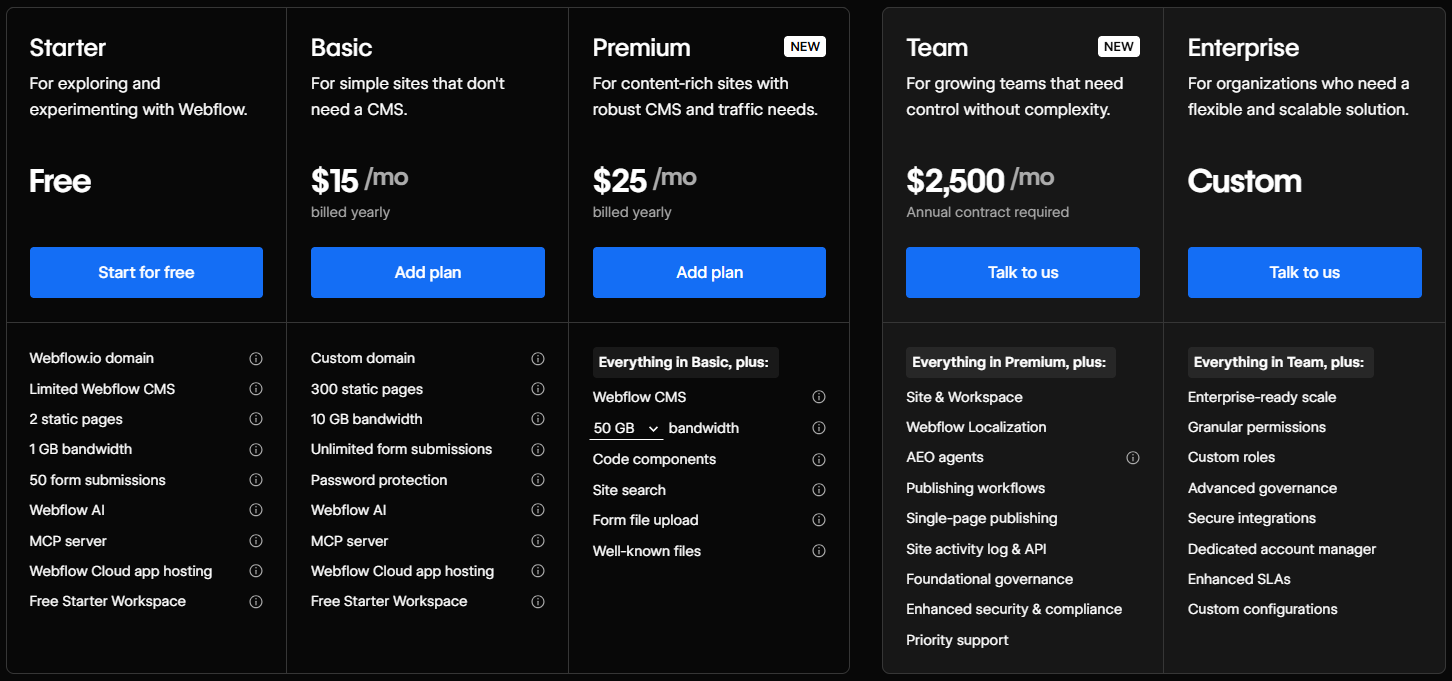
Webflow pricing is more predictable. Basic plan starts at 14 dollars per month (annual billing). CMS plan is 23 dollars per month. Business plan is 39 dollars per month. Ecommerce plans range from 29 to 235 dollars per month based on transaction volume. The total cost over 3 years for a typical brand site lands between 500 and 2,500 dollars depending on plan tier. Multi editor sites pay per editor seat. Custom domains, premium templates, and third party integrations add incremental cost.
The hidden cost factor: developer time
Webflow requires more design and configuration time upfront, but ongoing maintenance is simpler once a site is live. The visual canvas makes content updates fast for non technical team members. Lovable shifts cost in the opposite direction: faster initial build, but more developer time required for complex production requirements (custom integrations, security hardening, scaling). The ZAPTA pattern handles this well: build the first 80 percent in Lovable, refine the last 20 percent in Cursor with engineers for production grade quality.
The Startup Decision Matrix, Which Platform for Your Profile
The 12 row table below maps common startup profiles to the recommended platform. Find the row that best matches your situation.
TABLE 2, Match Your Startup Profile to Lovable or Webflow
Recommendations based on May 2026 production workflow data, G2 ratings, independent benchmark testing, and verified use cases across founder, agency, and enterprise scenarios.
Supporting Libraries and Third-Party Integrations
The platform itself is only half the picture. The libraries, plugins, and integrations you can plug in determine how fast you ship and how much custom code you avoid writing. Both platforms have integration strengths in 2026, but the strengths sit in dramatically different places.
The table below covers third party services most startups end up integrating. Cloudinary for media management, CMS capabilities, eCommerce, SEO tools, analytics, animations, and AI features. Where one platform has a meaningfully stronger story it shows up here.
TABLE 3, Library and Integration Support, Lovable vs Webflow
Sources: Cloudinary official docs (React SDK and JavaScript SDK), Webflow integrations directory, Lovable platform documentation, npm package registry, Zapier and Make.com integration counts.
Where Lovable ecosystem wins
AI native workflow: Every part of development is prompt driven. Generate components, refactor, debug, all through natural language. Webflow AI adds AI features but the core workflow is still visual.
Full stack capability: React frontend plus Supabase backend plus database schema, all generated together. Webflow is frontend only and requires separate backend services.
npm package access: React export means access to the entire 2 million+ npm package ecosystem. Direct integrations with modern AI tools, edge runtimes, and the latest JavaScript libraries.
Cursor integration: Pair Lovable with Cursor for refinement work. This is the ZAPTA pattern that ships production apps in 1 to 3 weeks.
Speed of iteration: Prompt to deployed change in seconds. Webflow requires visual edits, breakpoint configuration, and content updates that take significantly longer for app workflows.
Modern stack: React, TypeScript, Tailwind, Supabase. Production grade modern web stack from the first prompt. Fits naturally into the JavaScript developer ecosystem.
Where Webflow ecosystem wins
Mature CMS: Collections, multi reference fields, dynamic templates, conditional visibility, scheduled publishing. The CMS infrastructure is unmatched for content sites.
Animation depth: Timeline animations, scroll triggers, micro interactions, all configured visually without code. Webflow Interactions is the gold standard for no code animations.
eCommerce native: Webflow Ecommerce includes payments (Stripe, PayPal), inventory, tax, checkout, customer accounts. Lovable requires building from scratch with Stripe SDK.
SEO tooling: Custom meta tags, schema markup, sitemaps, OG tags, alt text fields, 301 redirects, clean semantic HTML. The depth Webflow provides is significantly better than Lovable's basic SEO.
Hosting and CDN: Webflow CDN powered by Fastly. Global edge network, automatic SSL, image optimization. No separate hosting decisions needed.
Mature integration ecosystem: 100+ native integrations plus thousands via Zapier and Make.com. Mailchimp, HubSpot, Memberstack, Outseta all work natively.
Real Example, Cloudinary Integration
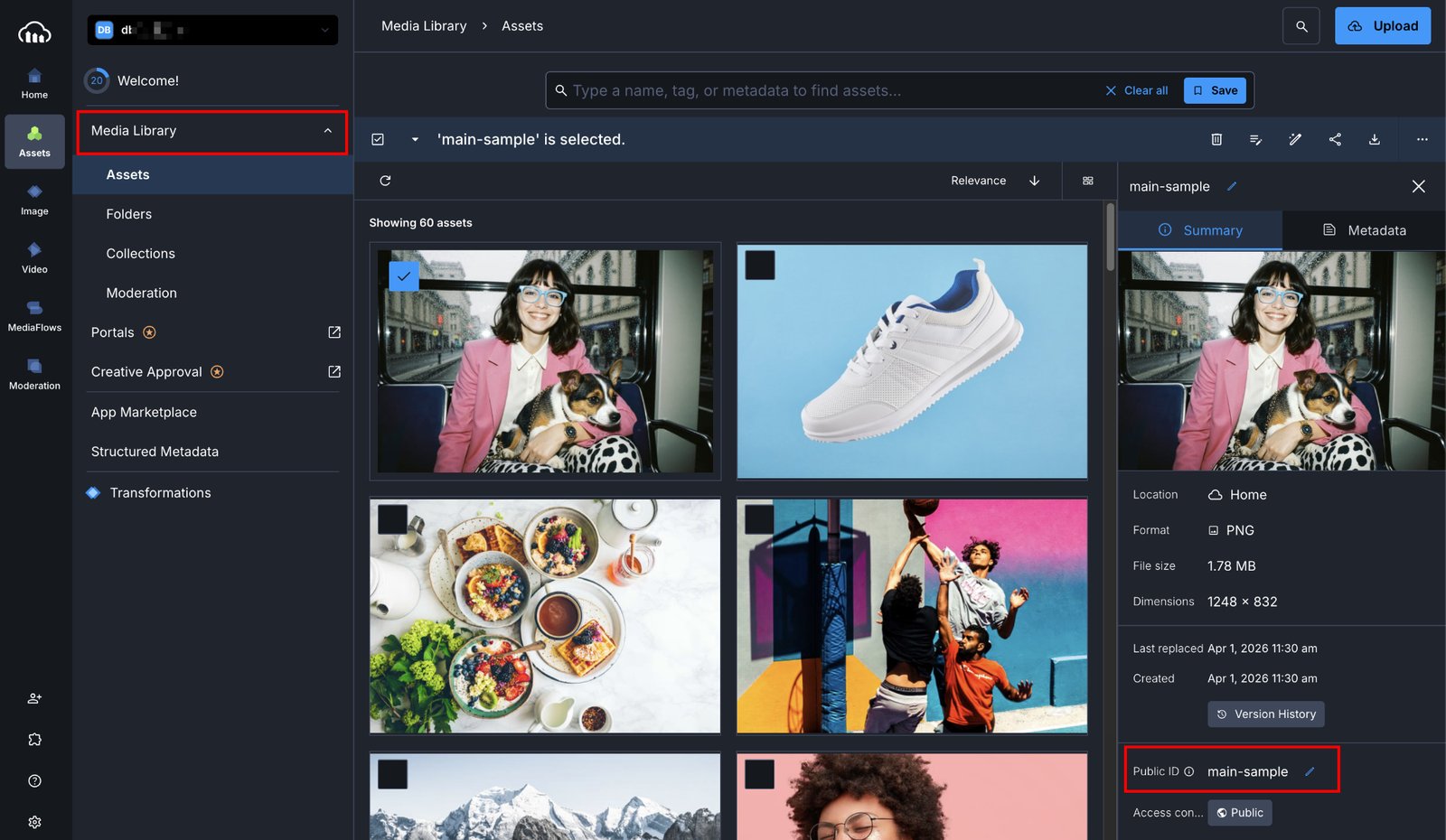
Cloudinary is a useful test case because almost every consumer facing site needs digital asset management. Both platforms have integration paths but the experiences differ significantly:
- Lovable: Direct npm cloudinary SDK in the React export. Integration requires writing code to handle upload, transformation, and URL generation. More flexible (full control over the integration) but more manual (no install and activate experience). Best for projects where Cloudinary is integrated deeply into the app workflow, not just as a media CDN.
- Webflow: No official Cloudinary plugin or app. Two integration paths exist. First, Webflow's built in asset manager handles most media optimization natively (responsive images, lazy loading, format conversion). Second, custom code embed using Cloudinary's JavaScript SDK and URL transformations for advanced features like video transcoding or AI based image analysis. Less plug and play than WordPress but native asset management covers most needs.
For content driven sites Webflow's native asset manager handles 80 percent of Cloudinary use cases without integration. For custom app interfaces with sophisticated media workflows, Lovable's React integration provides more control. The right choice depends on whether you are building a content site or a custom app.
Security Track Record, What Founders Need to Know
Security is the section most platform comparison articles skip. Both Lovable and Webflow have real security considerations that founders need to understand before committing to a platform for production.
TABLE 4, Recent Security Incidents and Considerations
Sources: React Security Advisories (Dec 2025, Jan 2026), CVE-2025-55182 disclosure documentation, NIST National Vulnerability Database, Webflow security documentation, npm advisory database.
What this means for Lovable projects
Lovable inherits the security profile of React, Next.js, and the broader npm ecosystem. This carries real risks that emerged sharply in late 2025:
CVE-2025-55182 (December 2025): Critical RCE in React Server Components affected Lovable projects using affected React versions. CVSS 10.0 score with active exploitation including cloud credential theft and cryptomining. Required urgent patching across the React ecosystem.
npm supply chain risk: Lovable exports use npm packages. Multiple package compromises in 2025 to 2026 affected downstream apps via transitive dependencies. npm has no formal quality gate.
Platform dependency risk: Lovable hosted apps depend on Lovable infrastructure. Platform outages, business issues, or pricing changes affect all hosted projects. Mitigation: export to your own hosting (Vercel, Netlify, AWS) for production deployments where platform risk matters.
Mitigation strategy: keep dependencies up to date with Dependabot or Renovate, monitor React advisories closely, export to your own hosting for production deployments, plan for the ZAPTA Technologies pattern (build in Lovable, refine in Cursor, ship to production with proper security review).
What this means for Webflow projects
Webflow has a meaningfully smaller security incident history than Lovable, partly because of its mature platform age and partly because of its frontend only architecture:
Account takeover risk: Standard SaaS attack vectors apply (credential stuffing, phishing). Webflow has 2FA and SSO available. Mitigation: enforce 2FA across all Webflow accounts, use SSO for team plans.
Webflow CDN dependency: Webflow hosts on Fastly. Fastly outages affect all Webflow sites. Historically rare but real platform risk. Mitigation: ensure you have a code export backup if your site is business critical.
Custom code injection risks: Both platforms allow custom HTML and JS embeds. Misconfigured embeds can introduce XSS or data leakage. Mitigation: audit third party scripts carefully, use Content Security Policy headers where supported.
Platform consolidation risk: Webflow's mature platform reduces but does not eliminate vendor lock in. Code export is available on paid plans but migration to a different stack still requires significant work.
Mitigation strategy: enable 2FA across all accounts, maintain regular site backups, document custom integrations carefully, use Webflow's SSO for team plans, plan for incident response if Fastly experiences outages.
Ecosystem Maturity and Risk Map for Founders
Beyond the platform itself, every choice carries ecosystem level risk. The list below covers the practical concerns founders should weigh, the things that rarely show up in platform comparison articles but cause real pain in production.
Lovable ecosystem risks
Token cost spikes: Complex iterations can dramatically increase token costs beyond the base 20 dollar Pro subscription. Mitigation: budget for token usage, factor into project economics, prefer fewer iterations of higher quality prompts.
Platform startup risk: Lovable is 3 years old. Strong trajectory but Series B startups carry real risk. Mitigation: export to GitHub regularly, plan for self hosting if platform changes affect your project.
Custom integration overhead: Beyond the supported integrations, custom features require manual React development. Mitigation: pair with Cursor for production refinement, or hire engineers for complex requirements.
Generic UI defaults: shadcn/ui defaults produce polished but generic interfaces. Brand differentiation requires custom design work. Mitigation: invest in design system customization or pair with Webflow for marketing sites.
Webflow ecosystem risks
Per editor pricing: Multi editor sites pay per seat. Teams of 5+ content editors face significant ongoing costs. Mitigation: consolidate editing responsibilities or evaluate alternative CMS for very large teams.
CMS item limits: Webflow CMS has hard limits per plan tier (2,000 items on CMS plan, 10,000 on Business). Large content sites can outgrow Webflow. Mitigation: evaluate item limits against 3 year content growth projections.
Visual development learning curve: 20 to 40 hours to become productive. Steeper than typical website builders. Mitigation: invest in training, hire Webflow specialists, or use templates for fast starts.
Backend functionality requires integrations: User accounts, payments beyond Ecommerce, and dynamic logic require Memberstack, Outseta, or Logic. Mitigation: factor integration costs into total cost.
Shared risks for both
Vendor lock in: Both platforms have varying degrees of lock in. Lovable provides GitHub export. Webflow provides HTML CSS export on paid plans. Neither is fully portable. Mitigation: maintain code exports and migration plans.
Backup discipline: Both platforms require regular backups. Lovable: GitHub sync and platform exports. Webflow: site backups and HTML CSS exports. Without backups, recovery from incidents is significantly harder.
Performance optimization: Both can be fast or slow depending on implementation. Test on your target audience devices and networks. Optimize images, caching, and JavaScript bundles regardless of platform.
Long term maintenance cost: Both platforms require ongoing engineering or design work as the web, dependencies, and your business evolve. Budget 15 to 20 percent of build cost annually for maintenance.
What Real Builders Say in 2026
Common Lovable praise
Speed to first working app (47 minute SaaS benchmark). AI native workflow feels like the future. Full stack generation (React plus Supabase plus database) is unmatched. Cursor integration for production refinement. 200M dollar ARR validates the model. Investor friendly demos in minutes. G2 rating 4.7 out of 5 reflects strong user satisfaction.
Common Lovable complaints
Token costs grow faster than expected on complex builds. Generic UI defaults (shadcn/ui) lack brand personality. Platform risk for a 3 year old startup. CVE-2025-55182 and broader React Server Components vulnerabilities created urgent patching cycles. Functionality can lag visual polish, apps look amazing but sometimes need engineering fixes. Limited CMS makes content sites awkward.
Common Webflow praise
Pixel perfect design control matches Figma comps exactly. Animation depth is industry leading. Mature CMS handles content workflows beautifully. Multi editor permissions work well for agencies. 12 years of platform maturity provides stability. Used by Dropbox, Discord, Vice, Lattice. SEO tooling depth gives marketing teams what they need.
Common Webflow complaints
Steep learning curve, 20 to 40 hours to become productive. Per editor pricing scales painfully for large teams. CMS item limits force migration on large content sites. Custom interactions sometimes require workarounds. Webflow AI feels added on rather than native. Webflow Ecommerce is good but not the strongest option for high volume stores.
Future Trajectory, Where Each Platform Is Heading
Lovable, scaling from MVPs to production
Lovable strategy in 2026 centers on three pillars. First, code quality improvements to make exported React more production grade. Second, ecosystem expansion through deeper integrations with Supabase, Stripe, and Auth0 to make end to end app builds smoother. Third, enterprise features for teams (collaboration, SSO, advanced controls) to move beyond solo founder use cases. The 552.5 million dollar funding war chest is fueling rapid feature shipping. The question for 2027 and beyond is whether Lovable can move from MVP tool to full production platform while maintaining its AI native speed advantage.
Webflow, deepening the design and enterprise moat
Webflow strategy in 2026 centers on three pillars. First, expanding Webflow AI capabilities to compete with AI native tools without sacrificing the visual canvas designers love. Second, enterprise feature depth (governance, audit logs, advanced permissions, accessibility tooling). Third, deeper CMS and Ecommerce capabilities to handle larger content sites and growing online stores. Webflow is doubling down on what it is best at (visual design plus mature CMS) while layering AI to keep pace with the AI native wave. The 4 billion dollar valuation and 12 years of platform maturity provide significant runway for this strategy.
Frequently Asked Questions
Q1: Which is better in 2026, Lovable or Webflow?
Neither is universally better. Lovable wins for SaaS MVPs, internal tools, dashboards, and any custom app where speed and full stack generation matter. Webflow wins for marketing sites, content driven brand sites, portfolios, and any project where design quality and CMS depth matter. The decision depends on whether you are building an app or a website. For most startups in 2026, the answer is to use the right tool for the right project: Webflow for the marketing site, Lovable for the product, the ZAPTA combined stack pattern for production refinement.
Q2: Can I migrate from Lovable to Webflow or vice versa?
Migration is possible but expensive in both directions. Lovable to Webflow requires rebuilding the design layer in Webflow's visual canvas and replacing app functionality with Webflow integrations (Memberstack for users, Webflow Ecommerce for payments). Webflow to Lovable requires rebuilding the design as React components and replacing the CMS as Supabase tables with custom queries. Neither migration is cheap. The right strategy is to choose the platform that fits your specific project type at the start. For many startups, the answer is to use both for different surfaces.
Q3: How does the cost actually compare?
For pure marketing sites, Webflow is cheaper and more predictable. Basic at 14 dollars per month or Business at 39 dollars per month. Total 3 year cost typically lands at 500 to 2,500 dollars for a brand site. Lovable starts at 20 dollars per month but token usage adds variable cost. Complex builds can exceed the base subscription. For simple MVPs the cost can be similar. For ongoing iterations and production refinement, Lovable plus Cursor (the ZAPTA pattern) often produces better total economics than trying to scale Webflow into app territory. Always model the specific feature requirements before committing.
Q4: Which is better for SEO?
Webflow, by a significant margin in 2026. Webflow provides custom meta tags, schema markup, sitemaps, OG tags, alt text fields, 301 redirects, and clean semantic HTML output. The SEO tooling depth is designer friendly and built for marketers. Lovable supports basic meta tags but lacks the depth of SEO controls that Webflow provides. For any project where organic search traffic is a primary growth channel, Webflow is the better choice. Lovable apps can rank with engineering effort but the tooling is significantly less mature than Webflow's designer friendly SEO controls.
Q5: What does ZAPTA recommend for a 2026 startup project?
ZAPTA recommends Webflow for marketing sites, landing pages, content driven brand sites, portfolios, and any project where design quality and SEO matter most. ZAPTA recommends Lovable for SaaS MVPs, internal tools, dashboards, custom app interfaces, and any project that needs full stack generation in 1 to 3 weeks. For complex production apps, ZAPTA recommends the combined stack approach: build the first 80 percent in Lovable, export to GitHub, refine the last 20 percent in Cursor with our 100 plus engineers, and ship to production with proper security review. Many startups use Webflow for the public marketing site and Lovable plus Cursor for the product. Every engagement starts with a free 30 minute discovery call where we recommend the right approach for your specific situation.
Related Insights




Your next great product decision starts with one conversation.
If your product isn't where you want it to be, 30 minutes with us might tell you why. And more often than not, we're exactly the team to fix it.
Book a Free Discovery Call