OpenAI vs Google AI for Business: Which Is Better in 2026?
OpenAI vs Google AI for business in 2026, head-to-head across productivity, chatbots, automation, coding, search, pricing, and ecosystem.
Two Frontier Platforms, One Procurement Decision
OpenAI and Google are the two AI platforms most enterprises in 2026 are actively choosing between. Both ship frontier models, both have credible enterprise sales motions, both are deeply integrated into productivity stacks. The question of which is better is rarely answered well online — most comparisons list features in tables and refuse to take a position.
This guide takes positions. Across the seven business use cases that actually drive procurement decisions — productivity, chatbots, automation, coding, search, pricing, and ecosystem — we name the winner per category and explain the reasoning. The honest top-line: model quality is no longer the discriminator. Ecosystem fit, contract structure, and data residency are.
Why This Decision Matters Right Now
Enterprise AI spending is on track to reach $297 billion in 2027, up from $134 billion in 2024 — a 30%+ compound annual growth rate. The platform decision a company makes in 2026 will shape its software stack, vendor relationships, and data flow for the rest of the decade. IDC Worldwide AI Spending Guide, 2024
Roughly 80% of generative AI workloads in production today run on models from fewer than ten organizations. OpenAI and Google sit at the centre of that concentration — together they likely serve over half of all enterprise generative AI traffic globally. Stanford AI Index Report, 2024
Gartner projects that by 2027, more than 50% of enterprise AI spend will move from experimentation to production-grade systems. The companies that pick the right platform now will compound that decision into measurable productivity gains. The companies that pick wrong will spend two years explaining their migration costs to the board. Gartner Hype Cycle for AI, 2024
Reddit threads in r/ChatGPT, r/Bard, and r/Enterprise AI consistently surface the same buyer frustration: vendor demos look identical, pricing pages are deliberately confusing, and the actual differences only become visible after deployment. The decision has to be made on use cases, not on demos. r/ChatGPT, r/Bard, r/Enterprise community discussions, 2024
The Two Platforms in 2026
Before getting into use cases, it helps to fix what each platform actually is. The names are bigger than the products underneath them, and the products underneath them have shifted significantly in 2025–2026.
OpenAI in 2026
OpenAI ships the GPT-5 family, the o-series reasoning models, the Sora video model, and ChatGPT Enterprise. The company is valued in the $300+ billion range and is the largest single source of generative AI traffic in the world. Microsoft holds a deep strategic and commercial partnership, and OpenAI's models are the engine behind Microsoft 365 Copilot, GitHub Copilot, and Azure OpenAI Service. The audience is broad: developers, enterprises, consumers, and the long tail of SaaS products that resell GPT through APIs.
Google AI in 2026
Google ships the Gemini family — Gemini Ultra, Pro, and Flash — through Workspace, Cloud Vertex AI, the Gemini consumer app (formerly Bard), and a deep integration into Search through AI Overviews. The DeepMind research lineage gives Google an unusually strong position in scientific AI (AlphaFold, AlphaCode) and native multimodality. The audience is broad too, but with strongest pull in enterprises already on Google Workspace, Google Cloud, or Android, and in scientific and research-heavy organizations.
Model quality is no longer the discriminator. The decision is about ecosystem fit, contract structure, and where your existing data already lives.
Head-to-Head Across Seven Business Use Cases
Each use case below names a clear winner, with reasoning. Where the verdict is genuinely close, we say so — and explain which scenario flips it.
1. Productivity & Document Work — Drafting, summarizing, formatting, slide and spreadsheet generation
Microsoft 365 Copilot
OpenAI: Microsoft 365 Copilot, powered by OpenAI's models, is the most widely deployed enterprise AI productivity tool in the world. It is embedded in Word, Excel, PowerPoint, Outlook, and Teams, with strong contextual awareness across documents and email. Pricing is $30/user/month on top of M365 licensing.
Google: Gemini for Workspace is embedded in Docs, Sheets, Slides, Gmail, and Meet. Native multimodality is genuinely useful in Sheets and Slides, and the integration with Google Drive search is sharper than Microsoft's. Pricing is $20/user/month for Business standard, often bundled into existing Workspace contracts.
Verdict: Tie — depends on existing stack — If the company is on Microsoft 365, Copilot is the answer. If on Google Workspace, Gemini for Workspace is the answer. Cross-stack adoption produces friction in both directions.
2. Customer-Facing Chatbots & Virtual Agents — Support automation, sales assistants, and conversational interfaces
OpenAI: ChatGPT API and the Assistants API have the deepest third-party tooling, the largest plugin ecosystem, and the strongest integration with vendors like Intercom (Fin), Sierra, and Cresta. GPT-5's tool use and function calling are mature in production, with a long catalogue of public deployments.
Google: Gemini through Vertex AI is excellent technically and integrates cleanly with Dialogflow and Google's wider conversational AI stack. Strong for organisations already on Google Cloud. Smaller third-party deployment ecosystem than OpenAI in 2026.
Verdict: OpenAI — More mature production deployments, more reference architectures, more applied AI builders shipping on top. Google catches up if the buyer is already on GCP, but ecosystem maturity favors OpenAI.
3. Workflow Automation & Agents — Connecting AI to internal systems to execute multi-step tasks
OpenAI: OpenAI's Assistants API, function calling, and the GPT-5 agent capabilities ship with strong third-party support — Zapier, Make, n8n, Salesforce, and Notion all integrate OpenAI as a first-class engine. Operator and the agent-tier products extended this through 2025.
Google: Vertex AI Agent Builder and Gemini's grounding in Google Cloud APIs are powerful inside the Google ecosystem. Outside it, the integration breadth lags OpenAI. Google's strength is in agents that need to grounds in Workspace and BigQuery data.
Verdict: OpenAI for general automation, Google for Google-data-grounded agents — If the agent is acting on email, documents, or third-party SaaS, OpenAI wins on ecosystem. If the agent is grounded in Workspace and BigQuery, Google's native integration is harder to beat.
4. Software Engineering & Coding Assistance — Code completion, debugging, code review, and agentic coding
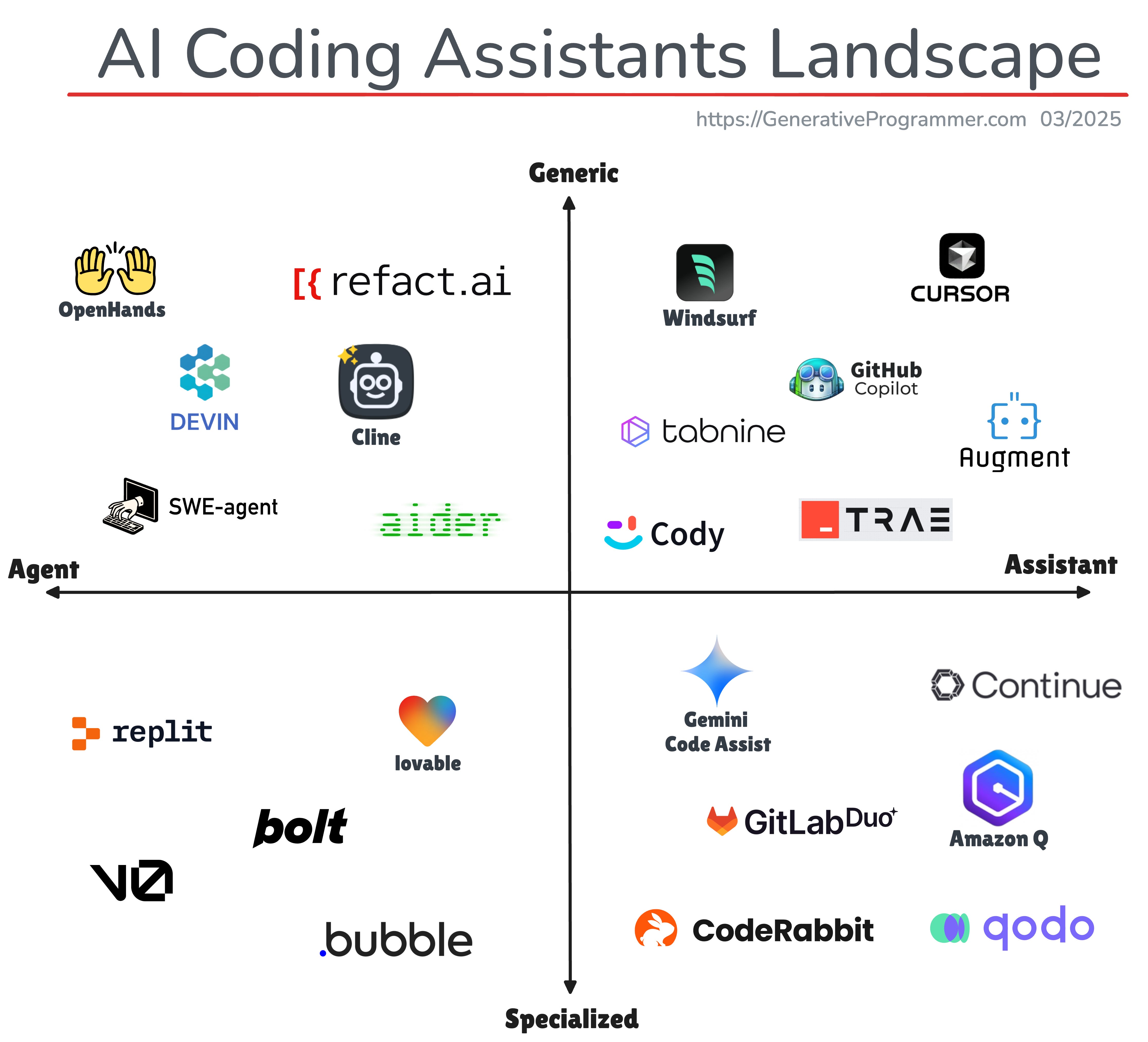
OpenAI: GitHub Copilot, powered primarily by OpenAI, has more than 1.8 million paid users and is the de facto standard for AI-assisted coding. Anthropic's Claude has eaten significant share at the top end (Claude Code), but OpenAI's reach through GitHub remains dominant. Pricing: $19/user/month (Copilot Business), $39/user/month (Enterprise).
Google: Gemini Code Assist (formerly Duet AI for Developers) integrates with VS Code, JetBrains, Cloud Workstations, and Android Studio. Strong in Google Cloud-native development. Smaller third-party plugin ecosystem than Copilot. Pricing: $19/user/month (Standard).
Verdict: OpenAI (via GitHub Copilot) — Larger user base, stronger third-party integration, and the GitHub default makes it the path of least resistance. Google wins specifically for GCP-heavy teams or Android-only shops.
5. Enterprise Search & Knowledge Retrieval — Finding information across internal documents, email, and data
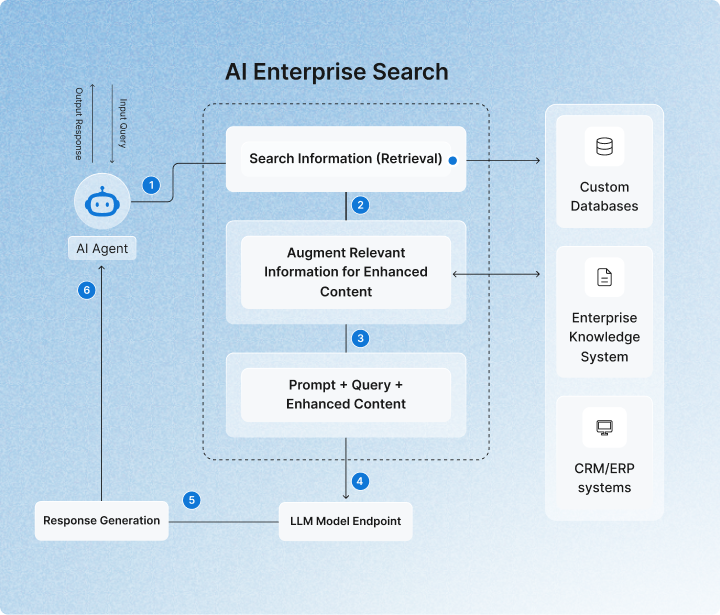
OpenAI: OpenAI does not ship a first-party enterprise search product. The strongest deployments use OpenAI through applied AI builders like Glean (search across enterprise SaaS), or directly through ChatGPT Enterprise's connectors and retrieval. Strong, but architected around partners.
Google: Google has decades of search infrastructure and ships Vertex AI Search and Agentspace for enterprise. Workspace's native search across Drive, Gmail, and Calendar is enhanced by Gemini in ways no competitor can match. AI Overviews demonstrate Google's search-grounded generative capability at consumer scale.
Verdict: Google — Search is Google's home category. The native integration with Workspace data, the BigQuery grounding, and the consumer-scale AI Overviews experience all favour Google. OpenAI is competitive only through applied AI builders.
6. Pricing & Total Cost of Ownership — What it actually costs to deploy and scale across an organization
OpenAI: OpenAI API pricing for GPT-5 sits in the mid-tier (cost per million tokens varies by model). ChatGPT Enterprise is around $60/user/month with volume discounts. Microsoft 365 Copilot at $30/user/month adds to existing M365 licensing. Costs at scale require multi-model routing strategy to control burn.
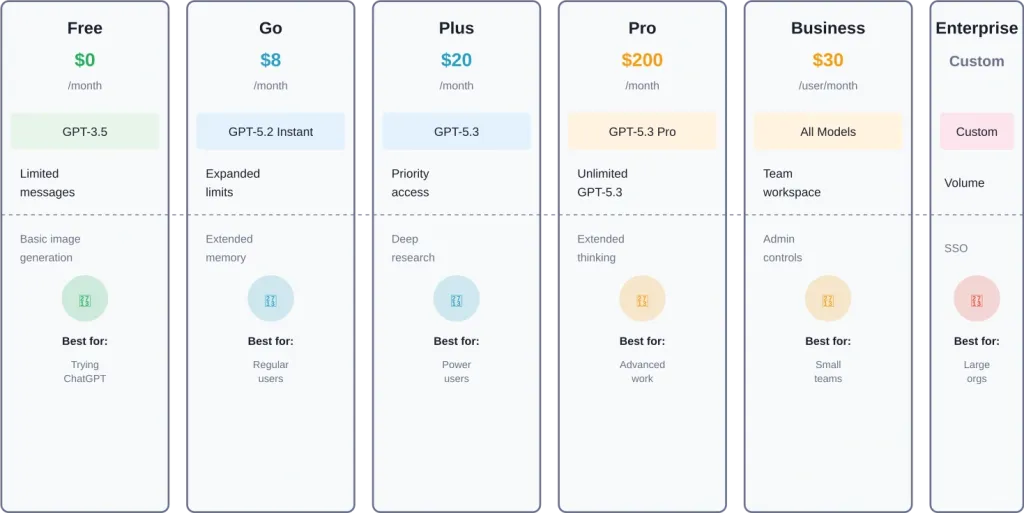
Google: Gemini Flash is one of the cheapest frontier-quality APIs in 2026, with aggressive per-token pricing. Gemini for Workspace at $20/user/month is consistently cheaper than Copilot. Vertex AI offers committed-use discounts for enterprise GCP customers.
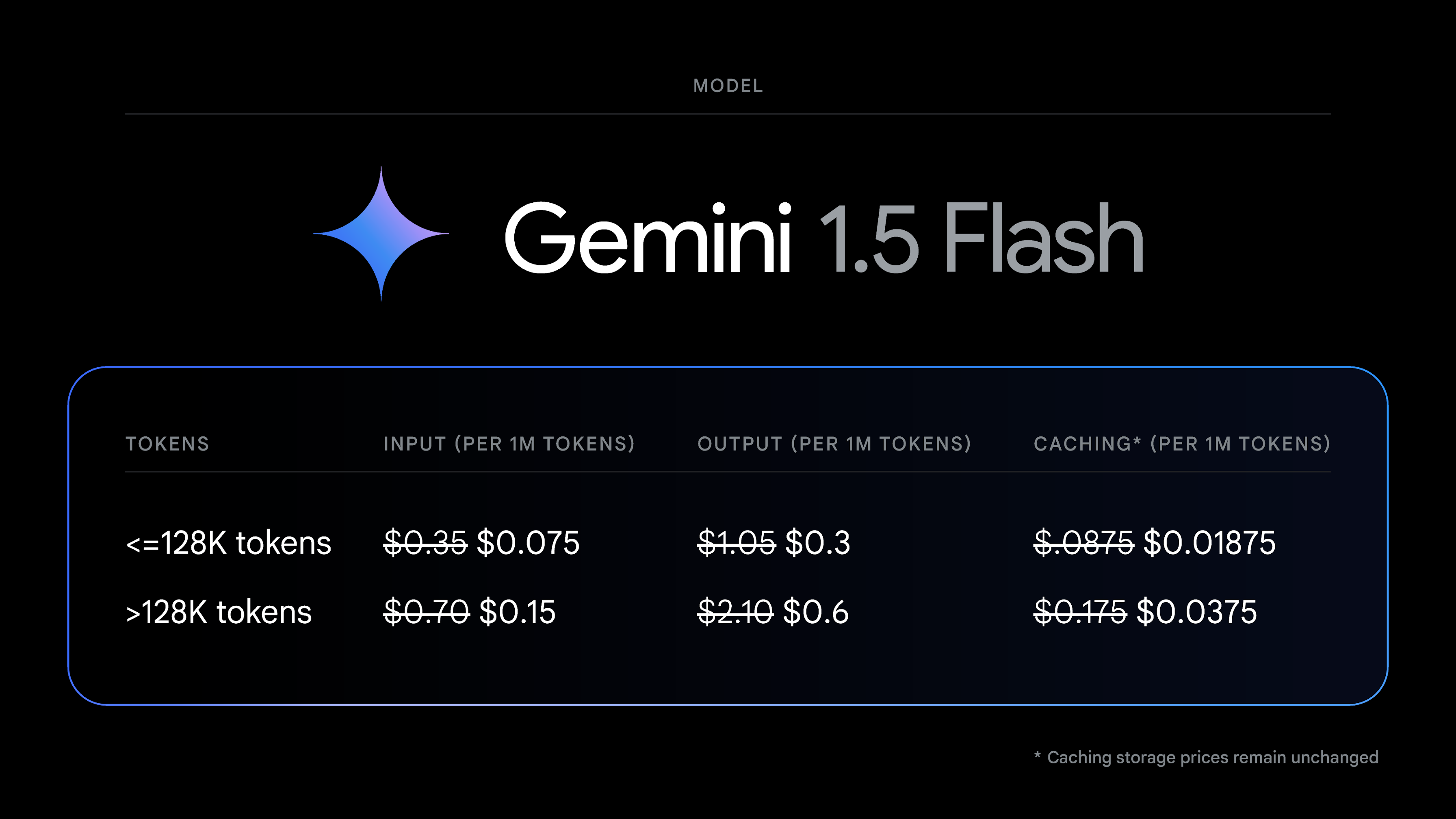
Verdict: Google — Across both API and per-seat pricing, Google is consistently cheaper in 2026 — particularly for high-volume API workloads and for organisations already on Google Cloud. OpenAI's premium models still win on raw capability, but Google wins on cost-per-task at scale.
7. Ecosystem & Long-Term Strategic Fit — Vendor partnerships, third-party tools, and platform momentum
OpenAI: OpenAI's ecosystem is the broadest in AI. Microsoft is the deepest commercial partner, but the ecosystem extends to Salesforce, ServiceNow, Notion, Intercom, GitHub, and thousands of applied AI builders. The largest model marketplace via Azure OpenAI Service. Risk: concentration on one upstream model provider for downstream products.
Google: Google's ecosystem is narrower but deeper inside Google Cloud, Workspace, and Android. Vertex AI Model Garden hosts third-party models including Anthropic's Claude, giving multi-model flexibility within one platform. Strong scientific AI lineage through DeepMind. Risk: smaller third-party SaaS integration depth.
Verdict: OpenAI for breadth, Google for depth in Google environments — The decision often comes down to where existing infrastructure already lives. OpenAI wins on ecosystem reach. Google wins for organizations whose data, identity, and contracts are already on Google Cloud or Workspace.
Verdict at a Glance
If you only take one thing from the seven head-to-heads above, take this. The category-by-category winners and the scenario that flips each verdict.
Knowing who is actually behind each platform clarifies what each is optimizing for and where the roadmap is going.
- OpenAI. Builders of GPT-5, the o-series reasoning models, Sora video, and ChatGPT Enterprise. Led by Sam Altman, with research roots from former Google Brain and DeepMind engineers. Valued around $300 billion in late-2024 funding rounds. Microsoft is the deepest commercial partner, with multi-billion-dollar capital and Azure as exclusive cloud partner. Roadmap focus: agentic systems, longer-horizon reasoning, and consumer scale through ChatGPT.
- Google AI / DeepMind. Builders of Gemini Ultra, Pro, and Flash, with the DeepMind lineage extending to AlphaFold, AlphaGo, and AlphaCode. Led by Demis Hassabis (Nobel laureate, 2024) and Sundar Pichai. Differentiator: native multimodality from training, deep scientific AI capability, and integration with Search, Workspace, and Cloud at scale. Roadmap focus: combining models with proprietary scientific and operational data.
- Microsoft (as OpenAI partner). Microsoft does not build frontier models internally at OpenAI's scale, but it ships the largest enterprise distribution of OpenAI's models through Azure OpenAI Service, M365 Copilot, and GitHub Copilot. The partnership is one of the most consequential commercial deals in software history.
The Investment Picture: Capital Behind Each Platform
The capital and infrastructure committed to each platform in 2024–2025 reveals where each is betting strategically.
- OpenAI: Raised over $20 billion across 2023–2025 across multiple rounds, including significant Microsoft commitments. Stargate Project — a proposed $500 billion AI infrastructure programme involving OpenAI, Oracle, SoftBank, and US government coordination — was announced in early 2025.
- Google: Alphabet committed roughly $75 billion in capex for 2025, with the majority going to AI infrastructure. Gemini development and TPU expansion are funded internally rather than through external rounds. Google does not face the same dilution pressure as OpenAI.
- Compute Parity: Both companies operate at hyperscaler-grade GPU and TPU capacity. NVIDIA H100 and B200 supply, plus Google's TPU v5p, give each platform comparable training and inference scale.
- Application-Layer Ecosystem Investment: The $25–30 billion that flowed into Layer 3 applied AI startups in 2024 disproportionately built on OpenAI APIs in 2024–2025 — but Anthropic and Gemini have meaningfully eroded that share through 2026.
Where Each Platform Is Actually Live in Enterprises
Outside the headlines, both platforms are deployed in measurable, named ways across major enterprises. The pattern of where each wins is consistent.
OpenAI in Production
- Klarna replaced the equivalent of 700 customer service agents with an OpenAI-powered assistant handling roughly two-thirds of customer chats.
- GitHub Copilot is used by more than 1.8 million paid developers worldwide, including production deployments at major banks, automotive companies, and tech firms.
- Morgan Stanley deployed an OpenAI-based assistant for its 16,000 financial advisors, surfacing internal research and client insights at scale.
- Microsoft 365 Copilot is in production across thousands of enterprise customers worldwide, embedded in daily document and email workflows.
Google AI in Production
- Wendy's deployed Google's conversational AI in drive-thru ordering, processing real customer transactions at scale.
- Goldman Sachs uses Google Cloud and Vertex AI for parts of its developer productivity and research workflows.
- Mercedes-Benz integrates Gemini into the MBUX in-car assistant for navigation, climate, and information queries.
- Workspace customers across hundreds of thousands of organisations now have Gemini built into Gmail, Docs, Sheets, and Meet.
Hype vs Reality: What Both Vendors Will Not Tell You
Where Both Genuinely Deliver
Document summarization, code completion, customer service automation, internal search, and meeting transcription all produce measurable productivity gains on both platforms. The vendor matters less than the use case for these — pick on ecosystem fit, not model benchmarks.
Where the Hype Has Outrun the Reality
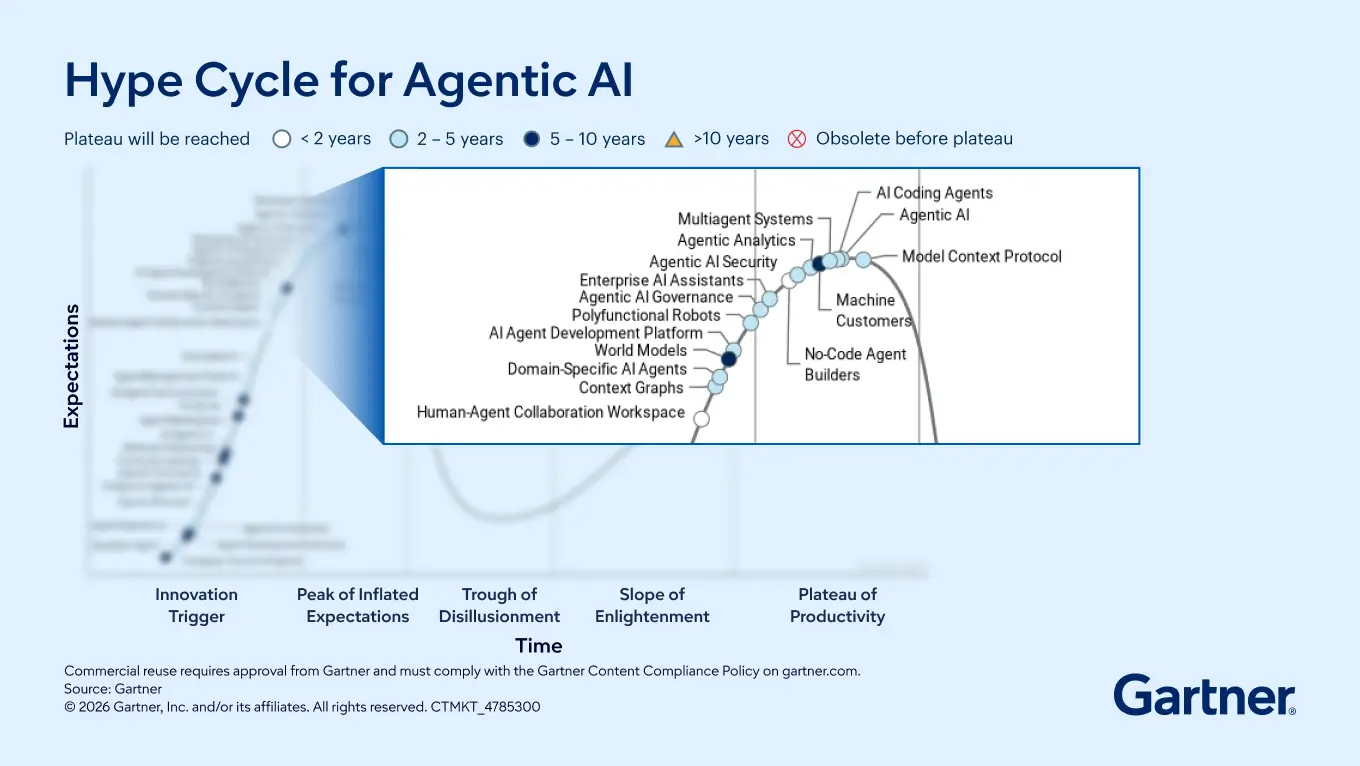
Both platforms market autonomous agents that book travel, manage finances, and run multi-step workflows without supervision. Independent benchmarks from MIT and Stanford in 2024 found that even the strongest agents complete fewer than half of complex multi-step tasks reliably without human intervention. Fully autonomous enterprise agents are not yet production-ready on either platform.
MIT CSAIL agent benchmarking · Stanford HAI 2024
Where Generic AI Features Have Underperformed
Gartner's 2024 survey found that 30% of generative AI projects will be abandoned after proof-of-concept by end of 2025 due to poor data quality, unclear value, or unmanaged costs. The pattern holds across both vendors. Narrow, well-scoped applied AI builds — pairing either platform with proper data engineering and evaluation — outperform broad rollouts of either Copilot or Gemini consistently.
Both OpenAI and Google ship at the frontier. The companies that get value from either are the ones who scope the use case sharply and instrument the deployment honestly. The ones that just buy seats and hope, do not.
Expert Views on the OpenAI-vs-Google Decision
- Andrej Karpathy (former Tesla AI director, OpenAI founding member) has argued publicly that the durable advantage in enterprise AI sits in owning data and evaluation infrastructure, not in picking the right base model. Buyers should treat the OpenAI-vs-Google choice as reversible at the model layer.

- Demis Hassabis (Google DeepMind CEO, Nobel laureate 2024) frames Google's bet as combining frontier models with proprietary scientific and operational data — a positioning that explicitly differentiates Google from OpenAI's more horizontal API strategy.

- Satya Nadella (Microsoft CEO) has positioned Microsoft as the most consequential commercial partner of OpenAI, with the explicit thesis that distribution of frontier AI through existing enterprise software is the highest-value layer of the stack.

- Gartner's analyst guidance across 2024–2025 has consistently advised enterprises to plan for multi-model AI architectures rather than betting on a single vendor — including pairing OpenAI for breadth with Anthropic or Google for specific workloads.
Five Questions Before You Pick a Side
1. Where does our data already live? If most of your knowledge is in Microsoft 365, OpenAI through Copilot is the natural fit. If it is in Google Workspace and Cloud, Gemini is. Migrating data to chase a model is almost never worth it.
2. What is our actual primary use case? Coding favors OpenAI. Search favors Google. Productivity is stack-dependent. Pick based on the use case that drives 80% of the value, not on benchmark scores.
3. What is our 24-month total cost of ownership? Per-seat pricing scales with headcount; API pricing scales with usage. Model both at projected scale, not at today's pilot.
4. Are we comfortable with vendor concentration? OpenAI through Microsoft is one platform with two strategic dependencies. Google is one platform with one. Anthropic, open-weight models, and multi-model routing through Vertex or Bedrock all reduce the lock-in question.
5. Who actually owns this decision day to day? Tools without a named owner become orphan SaaS. Whichever platform you pick, name the owner before signing — they will need to run evaluation, manage costs, and govern data flows for the duration of the contract.
Key Takeaways
- Both ship at the frontier. Model quality is no longer a meaningful discriminator between OpenAI and Google in 2026.
- Ecosystem fit usually decides the answer. Microsoft 365 organizations should default to OpenAI through Copilot. Google Workspace and Cloud organisations should default to Gemini.
- OpenAI wins on breadth. Larger third-party ecosystem, more applied AI builders, and the GitHub Copilot dominance in coding.
- Google wins on price, search, and Google-native data. Cheaper at scale, better for enterprise search and Workspace-grounded agents.
- Plan for multi-model. The strongest enterprise AI architectures use OpenAI as the default and bring in Google or Anthropic for specific workloads — not a single-vendor commitment.
Frequently Asked Questions
Which is better for enterprise use in 2026, OpenAI or Google AI?
Neither is universally better. OpenAI wins for organizations on Microsoft 365 and for use cases like coding, customer chatbots, and broad ecosystem reach. Google wins for organizations on Workspace and Cloud, for enterprise search, and for cost-sensitive high-volume API workloads. The honest answer is that ecosystem fit and existing data location decide most procurement decisions before model quality even comes into play.
Is GPT-5 better than Gemini Ultra?
Across published benchmarks in 2026, both models trade leadership depending on the task. GPT-5 holds slight edges on reasoning and tool use; Gemini holds edges on long-context multimodal tasks and on raw cost-per-token at the Flash tier. For most enterprise use cases the differences are small enough that they should not drive the decision — vendor relationship, data residency, and ecosystem matter more.
How much does each platform cost for a 100-person company?
Rough order of magnitude: Microsoft 365 Copilot at $30/user/month is $36,000/year for 100 users. Gemini for Workspace at $20/user/month is $24,000/year. ChatGPT Enterprise at around $60/user/month is $72,000/year. API costs are usage-based and depend heavily on workload — high-volume API customers consistently report Google to be cheaper at scale, while OpenAI's premium models are still chosen when raw capability is the priority. Verify current pricing with both vendors before contract.
Can we use both OpenAI and Google AI together?
Yes, and many enterprises do. Multi-model architectures route different workloads to different models — OpenAI for one set, Google for another, and increasingly Anthropic Claude for a third. Google's Vertex AI Model Garden explicitly supports this by hosting Anthropic's Claude alongside Gemini. Multi-model routing reduces vendor lock-in and lets each model cover its strongest use cases.
Which platform is better for coding assistance?
OpenAI through GitHub Copilot remains the dominant choice for AI coding in 2026, with over 1.8 million paid users and the broadest IDE and language coverage. Anthropic's Claude (via Claude Code) has eaten significant share at the high end. Google's Gemini Code Assist is competitive specifically for Google Cloud-native development and Android engineering, but lags GitHub Copilot in third-party plugin ecosystem and developer mindshare.
Which platform handles data privacy and enterprise compliance better?
Both platforms offer enterprise-grade data handling — ChatGPT Enterprise, Azure OpenAI Service, Vertex AI, and Workspace AI all commit to not training on customer data and provide enterprise compliance certifications (SOC 2, ISO 27001, HIPAA where applicable). Google has stronger native data residency controls for regions outside the US through Google Cloud's regional infrastructure. OpenAI through Azure inherits Microsoft's regional data residency story. Both are credible — confirm specific certifications match your industry's regulatory requirements before signing.
How should we approach this decision practically?
Start with three questions: where does our data live, what is our primary use case, and what are we already paying for. The platform that maps cleanly to all three is usually the answer. Run a 60–90 day pilot with the top two use cases — not a feature-by-feature bake-off. In client projects we often see the right platform identified within weeks once the use case is scoped sharply, but procurement decisions made on demos rather than scoped pilots tend to require painful migrations within 18 months.
Related Insights

Your next great product decision starts with one conversation.
If your product isn't where you want it to be, 30 minutes with us might tell you why. And more often than not, we're exactly the team to fix it.
Book a Free Discovery Call